If you drive toward downtown Madison or the UW-Madison campus during the workweek, you probably spend part of the trip deciding where the car will end up and what it will cost to leave it there. Park-and-ride is the lower-friction alternative: leave your car in a free lot at the edge of the metro area and ride a bus, carpool, or bike the rest of the way.
Metro Transit operates five Park & Ride lots across the Greater Madison region, and this guide explains where they are, which routes they serve, and how long you can leave a vehicle.
This article follows what the City of Madison publishes on its Metro Transit Park & Ride page and the Greater Madison MPO park-and-ride page, verified November 2026.
Routes and lot details change with Metro service adjustments, so treat this as a snapshot and confirm on the live pages before a trip.
What Is a Park-and-Ride Lot?
A park-and-ride lot is a free parking area built for people who want to shorten the drive-alone portion of their trip. The Greater Madison Metropolitan Planning Organization describes them as an affordable, multi-modal option: you park your vehicle for free at a designated lot and complete your trip by carpool and, where connections are available, bus or bike.
Metro Transit operates five Park & Ride locations around the region.
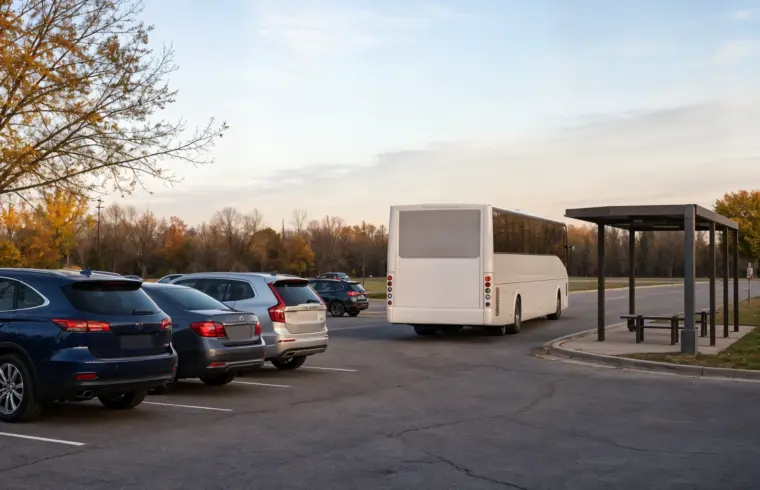
Commuters who live far from a bus route can park their cars for free and take the bus the rest of the way to their destinations.
The MPO lists carpooling, vanpooling, riding the bus, and biking among the ways to finish a trip from a park-and-ride lot, so the same free parking space can anchor a shared commute as easily as a solo bus ride.
How to Use a Park-and-Ride Lot
The pattern is the same at every lot and takes only a few steps. Drive to the lot and park in any open stall; there is no charge to park. Note which routes serve the lot and the posted time limit, then walk to the bus stop or meet your carpool and leave the car behind.
When you board, pay the bus fare through Metro’s fare card or a contactless payment option, then ride to your stop. On the return trip, ride the bus back to the lot and collect your car. If you are carpooling or cycling, you simply return to the same lot where the trip began.
The Five Metro Transit Park & Ride Lots
The five lots are spread across the region, mostly near Beltline or Highway 151 interchanges so commuters can reach them without adding a detour. Here is each one, with the details Metro publishes.
Junction Road — 432 S Jct Rd, Madison, WI 53719, on the west Beltline (Highway 12/14) at exit 254, south of Mineral Point Road. It has 88 parking spaces and is served by Routes A, D1, F, R, and 55.
Dutch Mill — 46 Collins Ct, Madison, WI 53716, on the Beltline (Highway 12/18) at exit 266, north on Highway 51, off Broadway East. At 227 spaces it is the largest of the five, and it is served by Routes L and 38.
Sun Prairie — 2751 O’Keeffe Ave, Sun Prairie, WI 53590, on Highway 151 at exit 100, south on Reiner Road, off O’Keeffe Avenue. It has 73 spaces and is served by Routes A, S, and W.
American Center — 5601 Eastpark Blvd, Madison, WI 53718, on Highway 151 at exit 98B, north on American Parkway, off Eastpark Boulevard. It has 141 spaces and is served by Route A, which stops one block west of the lot on American Parkway.
Verona — 2585 Old PB, Verona, WI 53593, on Highway 151/18 at exit 81, East Verona Avenue, off Old PB.
It offers 137 parking spaces and serves Routes D2 and 75.
Two of the five lots sit outside Madison’s city limits, in Sun Prairie and Verona, which is a reminder that this network is regional. The Greater Madison MPO plans transportation across Dane County, and the park-and-ride lots serve a wider commute corridor, not just people who live inside Madison.
Individual lots differ in what they offer, and the MPO page points to an interactive map showing the amenities and transportation options available at each park-and-ride location in Dane County.
How Long You Can Park
The posted time limits vary by lot, so check the signage before you leave a car for more than a day. Dutch Mill has the most detailed rules: the west lot allows parking up to seven days in all stalls not marked as 30-minute, while the east lot is daily parking in the northern rows closest to the Metro bus stop and seven-day parking in the remaining rows.
American Center and Verona both allow cars to be parked for up to 48 hours. The Metro page does not state a time limit for Junction Road or Sun Prairie, so treat those as day-use unless signage at the lot says otherwise, and confirm on the live page before planning a multi-day stay.
For an ordinary commute none of this matters: you arrive in the morning and leave in the evening, well within every posted limit.
UW-Madison Employee Park & Ride
Park-and-ride is not only for bus riders heading downtown. The MPO notes that UW-Madison offers Park & Ride permits that give employees an affordable way to park off campus and finish their commute by shuttle or other transportation.
UW Transportation Services manages this separate permit program, independently of the Metro lots available to the general public.
If you are driving onto campus for a visit rather than a daily commute, the rules are different. Our UW-Madison visitor parking guide covers campus garages, surface lots, and after-hours parking.
When Park-and-Ride Makes the Most Sense
Park-and-ride earns its keep on the weekday commute, especially for anyone who works downtown or on campus but does not want to pay for a garage every day or search for a street space. Parking is free at the lot, so the only cost is the bus fare, which Metro collects on board or through its fare card and contactless payment options.
For a commuter whose employer does not subsidize a garage or ramp, that trade can be the difference between a predictable bus ride and a daily hunt for an open spot.
The lots are also a quiet winter strategy. When Madison’s alternate-side parking rules are in effect from November through March, they restrict overnight street parking so plows can clear the roads. Leaving the car at a park-and-ride lot near your route sidesteps the evening shuffle of moving the car to the correct side.
Our Madison winter parking rules guide explains those seasonal restrictions in detail.
Before You Go: A Quick Checklist
A park-and-ride trip needs a little planning up front.
Check the Metro Transit Park & Ride page to confirm that your lot still serves the expected route, then use Metro’s trip planner to schedule your connection.
If you plan to leave the car overnight or longer, re-read the lot’s posted limit, since a few locations cap stays at 48 hours. If anything about a specific lot or route is unclear, Metro’s customer service line at (608) 266-4466 can answer the question before you go.
Park-and-ride is one of the simplest ways to make a Madison-area commute cheaper and less stressful. The five Metro Transit lots cover the main approach corridors, parking is free, and the bus completes the trip.
Because routes and limits change with Metro service updates, the official Park & Ride page is the authoritative, up-to-date source.